
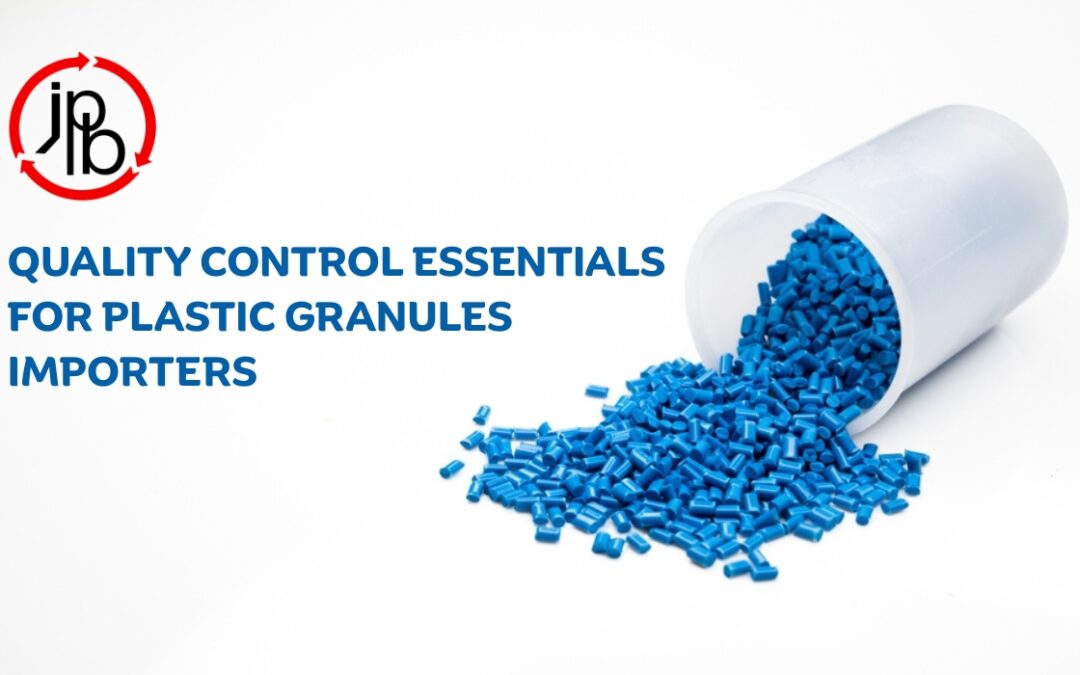
When it comes to importing plastic granules, one truth stands out – quality is everything. Whether you’re manufacturing household goods, automotive parts, or packaging products, the quality of your plastic granules directly impacts performance, appearance, and longevity. That’s why experienced importers never gamble on their suppliers. They partner with trusted names like Jain Plastic Bhandar, known as one of the best plastic dana suppliers in Delhi for their consistent quality and reliability.
But here’s the thing: quality control isn’t just about checking a few samples at the port. It’s a systematic approach that begins right from sourcing and runs through every stage – inspection, testing, documentation, and certification. Let’s break down the essentials every importer should master to stay competitive and ensure their materials meet the highest standards.
Understanding the Stakes of Quality Control
Before we jump into the details, it’s important to understand what’s at risk. Subpar plastic granules can lead to product rejections, machine damage, increased wastage, and even brand reputation loss. The difference between a premium and a poor-quality batch can be the difference between profit and loss.
That’s why successful businesses source from the top plastic granules suppliers in Delhi who prioritize quality testing and consistency. A reliable supplier like Jain Plastic Bhandar ensures every batch of PP, HDPE, LDPE, and GPPS granules meets international standards – giving importers peace of mind and a competitive edge.
Step 1: Source from Verified and Trusted Suppliers
Let’s start with the foundation – choosing the right supplier. The most advanced testing systems mean nothing if your source isn’t credible. Reputed suppliers not only offer transparency but also maintain strict internal quality checks.
As one of the top PP plastic granules suppliers in Delhi, Jain Plastic Bhandar sources raw materials from certified manufacturers and runs each consignment through standardized inspections. This ensures that granules meet the specifications for melt flow rate (MFR), tensile strength, and color consistency.
Pro tip: Always check for certifications like ISO, REACH, or RoHS compliance when partnering with suppliers. It’s a quick indicator that their production and quality systems meet global expectations.
Step 2: Check Melt Flow Index (MFI) Consistency
For plastic importers, MFI (or MFR — Melt Flow Rate) is a vital parameter. It measures the ease of flow of the melted polymer. Simply put, it tells you how the material behaves during processing. An inconsistent MFI means unpredictable molding performance, poor finish, and waste.
This is why the best plastic dana supplier in Delhi always provides detailed data sheets with each batch. The technical data helps buyers compare consistency and ensure compatibility with their manufacturing processes. If your supplier can’t provide these details, that’s a red flag – they might not have a robust testing protocol.
Step 3: Inspect Color Uniformity and Contaminant Levels
Color is more than just an aesthetic factor. It’s often tied to the chemical stability and processing quality of the granules. Importers should inspect for:
- Discoloration – A sign of overheating or contamination during production.
- Black specks or foreign particles – Indicate poor filtration or recycled impurities.
- Uneven pigmentation – Suggests inadequate mixing during compounding.
Top suppliers like Jain Plastic Bhandar, one of the top GPPS plastic granules suppliers/ dana suppliers in Delhi, use advanced filtration systems and spectrophotometric testing to guarantee visual and structural uniformity. This helps manufacturers achieve consistent end products with fewer rejections.
Step 4: Test for Moisture Content and Thermal Stability
Moisture is one of the silent destroyers of plastic granule quality. If the moisture content isn’t properly controlled, it can cause bubble formation, poor surface finish, or brittleness during molding. This is especially critical for PP and GPPS granules.
Quality-driven importers know the importance of suppliers who pre-dry granules and store them in controlled environments. That’s another reason why Jain Plastic Bhandar ranks among the top plastic granules suppliers in Delhi – the company invests heavily in moisture control and temperature monitoring systems.
Thermal stability is equally important. Overheated or improperly cooled granules can lose essential polymer properties. Always look for material certifications that include thermal degradation test results.
Step 5: Verify Mechanical Properties Through Testing
Mechanical testing forms the backbone of quality validation. It determines how the material performs under real-world stress. Importers should insist on tests for:
- Tensile strength
- Impact resistance
- Flexural modulus
- Hardness and elongation
These numbers reveal the durability of the granules and their suitability for various applications – from automotive components to household containers. The best plastic dana supplier in Delhi, like Jain Plastic Bhandar, shares this data upfront so clients can make informed decisions without second-guessing material performance.
Step 6: Use Batch Traceability and Documentation
Every importer should demand batch traceability. It’s the only way to ensure accountability in case of any defects or inconsistencies. Reliable suppliers maintain a detailed record of each batch – including production dates, raw material sources, and test results.
At Jain Plastic Bhandar, every delivery includes proper labeling, documentation, and certification. This level of transparency is why they’ve earned a reputation as one of the top PP plastic granules suppliers in Delhi for businesses that value consistency and compliance.
Step 7: Demand Sample Testing Before Bulk Import
Importers often make the mistake of approving large shipments without testing small samples first. A single test batch can reveal potential issues early, saving you thousands in rejections and delays.
The top GPPS plastic granules suppliers/ dana suppliers in Delhi like Jain Plastic Bhandar, readily provide sample batches for lab or pilot testing. Whether you need GPPS, HIPS, or PP granules, sample testing helps you validate quality and ensure seamless integration into your manufacturing line.
Step 8: Assess Packaging and Handling Standards
Even the highest-quality granules can degrade if packaging or transport isn’t up to standard. Moisture exposure, UV light, or contamination during transit can reduce usability.
Suppliers recognized among the top plastic granule suppliers in Delhi take packaging seriously. Jain Plastic Bhandar, for example, uses sealed, moisture-resistant packaging and safe handling protocols to ensure granules reach clients in perfect condition. Importers should also check that bags are labeled with batch numbers, grade details, and net weight for easy traceability.
Step 9: Conduct Third-Party Lab Testing When Needed
Even with trusted suppliers, it’s wise to perform independent third-party testing occasionally – especially for high-value or critical projects. Labs can analyze granule composition, verify polymer grades, and detect contamination at micro levels.
This not only safeguards your business interests but also enhances credibility with your downstream buyers. A proactive importer verifies, not assumes.
Step 10: Build Long-Term Supplier Relationships
Once you’ve identified reliable partners, build long-term relationships. Suppliers who understand your quality expectations will go the extra mile to maintain consistency. Over time, this partnership leads to better pricing, customized solutions, and priority support.
That’s exactly what makes Jain Plastic Bhandar a go-to name for businesses looking for the best plastic dana supplier in Delhi. Their repeat clients rely on them not just for supply but also for technical guidance and honest consultation.
Why Delhi Businesses Trust Jain Plastic Bhandar
Delhi’s manufacturing ecosystem thrives on strong supplier networks, and Jain Plastic Bhandar stands out as a trusted partner across industries. From injection molding to extrusion-grade materials, they provide a wide range of plastic granules that meet both local and international standards.
Their commitment to quality, transparency, and service has positioned them as one of the top plastic granules suppliers in Delhi – a reputation built on decades of consistency. Whether you need PP, HDPE, LDPE, ABS, or GPPS granules, their quality control process ensures each product line delivers exactly what it promises.
Quality Control Practices That Set Jain Plastic Bhandar Apart
Let’s dig deeper into what makes Jain Plastic Bhandar a preferred choice among importers and manufacturers.
- Strict Vendor Screening: Only certified producers are shortlisted for raw material sourcing.
- Comprehensive In-House Testing: Every batch undergoes MFI, moisture, and impact testing.
- Traceability: Full documentation and tracking from production to delivery.
- Technical Support: Expert consultation for choosing the right grade and processing parameters.
- Customer-Centric Service: Consistent supply, competitive pricing, and transparent communication.
This multi-layered quality control framework ensures buyers never have to worry about inconsistent granules or material failures — a promise that defines a top PP plastic granules supplier in Delhi.
The Importance of Partnering with Reliable GPPS Suppliers
GPPS (General Purpose Polystyrene) is widely used for rigid, transparent applications – from plastic cups to electronic housings. However, its brittleness makes quality consistency critical. Poor-quality GPPS can crack under minor stress or show poor surface clarity.
That’s where the top GPPS plastic granules suppliers/ dana suppliers in Delhi play a vital role. They ensure that each granule batch maintains the right molecular weight and optical clarity. Jain Plastic Bhandar’s GPPS granules are known for high transparency, uniform flow, and superior moldability – key traits for manufacturers targeting export-grade production.
How Quality Control Affects Long-Term Profitability
Let’s face it – price matters, but quality defines profit. Importers who chase the lowest price often end up paying more in the long run due to rejections, rework, and brand reputation damage. Quality control, though it requires effort upfront, ensures predictable outcomes and higher efficiency.
Partnering with the best plastic dana supplier in Delhi means fewer breakdowns, smoother production runs, and better end-product quality. That translates directly into higher profitability and stronger market trust.
Emerging Trends in Quality Control for Plastic Granules
The industry is evolving fast, and so are the tools for maintaining quality. Here are a few trends top importers are adopting:
- AI-Driven Sorting Systems – Automatically detect and remove contaminants.
- Infrared Spectroscopy – For rapid polymer identification and purity checks.
- Automated Data Logging – To track every parameter digitally for better transparency.
- Sustainability Testing – Ensuring recycled content meets green manufacturing standards.
Leading suppliers like Jain Plastic Bhandar are already integrating these technologies to stay ahead and maintain their edge as the top plastic granules suppliers in Delhi.
Final Thoughts
Quality control isn’t just a technical checklist – it’s a mindset that defines how you source, test, and build trust. For plastic granule importers, partnering with a reliable supplier is the cornerstone of this process.
Jain Plastic Bhandar, recognized as the best plastic dana supplier in Delhi, has built its reputation by making quality a non-negotiable standard. From PP and GPPS granules to other engineering plastics, their commitment to consistency, transparency, and long-term reliability sets them apart as one of the top PP plastic granules suppliers in Delhi and among the top GPPS plastic granules suppliers/ dana suppliers in Delhi.
If you’re an importer or manufacturer looking for assured quality and long-term value, Jain Plastic Bhandar should be your first call. Because in the world of plastics, quality control doesn’t just protect your products – it protects your brand.