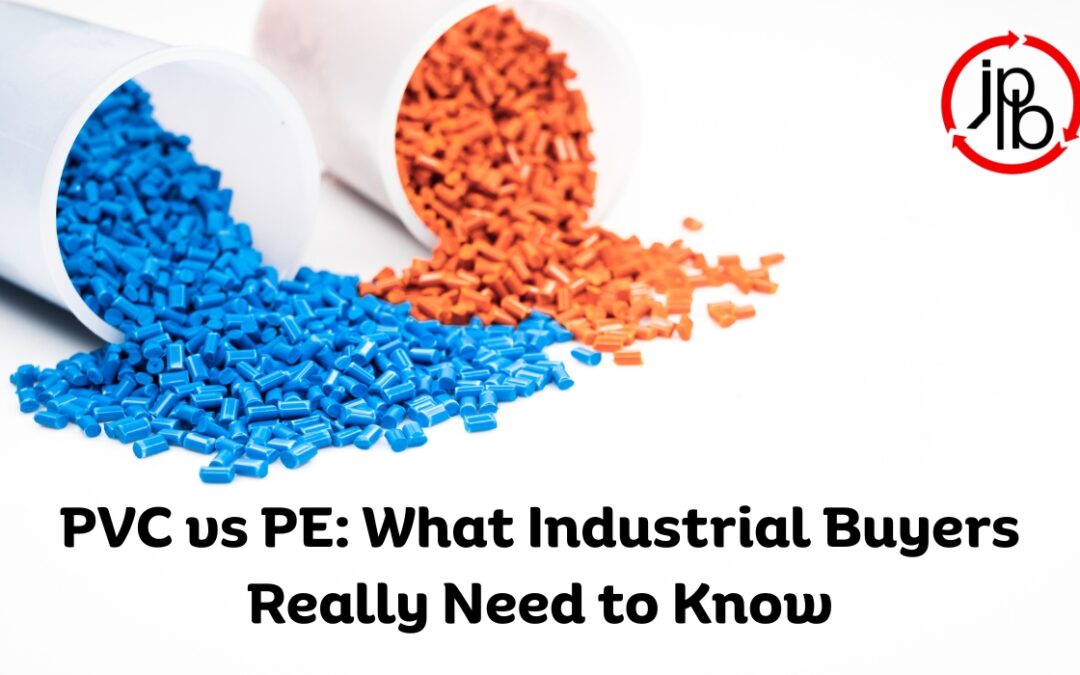
When you’re in the market for bulk plastic resin, you’ll quickly realize not all polymers are created equal. Polyvinyl Chloride (PVC) and Polyethylene (PE) are two of the most common plastics out there. Each has its strengths and weaknesses, and the choice between them comes down to how you plan to use the material.
Here’s the thing: you need to get this right. Whether you’re talking to plastic raw material suppliers, plastic dana suppliers, or plastic granule suppliers, the difference matters. Wrong material, wrong supplier, wrong price, three strikes and your production line grinds to a halt.
Let’s break it down so you can go into those negotiations with confidence and clarity.
What Are PVC and PE?
Before you deliberate with your plastic raw material suppliers, you need a baseline understanding of the materials themselves.
PVC (Polyvinyl Chloride) is a rigid plastic that’s strong and flame-retardant. It’s everywhere — from pipes and window frames to wires and flooring.
PE (Polyethylene) comes in several forms (HDPE, LDPE, LLDPE), but in general it’s a softer, more flexible plastic. Think containers, films, bottles, and liners.
When you talk about these with plastic granule suppliers or plastic dana suppliers, you’ll notice pricing, handling, and performance expectations differ.
Mechanical Properties
Strength and Rigidity
PVC is rigid and hard. When strength matters, structural parts, frames, ducts, PVC wins.
PE, especially HDPE, is tough and impact-resistant but not as rigid as PVC. It flexes instead of snapping.
Industrial buyers who need stiffness will lean toward PVC from plastic granule suppliers. Those who want impact resistance and flexibility will ask for PE from plastic raw material suppliers.
Flexibility
PE flexes. It bends before it breaks. LDPE and LLDPE are particularly flexible.
PVC can be made flexible with plasticizers, but raw PVC resin from plastic granule suppliers is inherently stiff.
If your product needs to flex in use, like packaging films or soft tubing, PE from trusted plastic dana suppliers is usually the better call.
Chemical Resistance
Here’s where things get interesting.
PE has excellent chemical resistance. Many acids, bases, and solvents won’t touch it. If your product sees aggressive chemicals, storage tanks, liners, PE from best plastic granules suppliers is worth paying for.
PVC has good resistance, too, but chlorine in its backbone makes it a different beast. Some solvents can attack it.
So when you’re asking plastic raw material suppliers about suitability for chemicals, be specific. “I need resistance to X, Y, and Z” gets you a better answer than “I need something resistant.”
Thermal Properties
Temperature performance is a common point of confusion.
PVC handles heat fairly well compared to many other plastics. It has a higher Vicat softening point and can stand up to warm environments.
PE softens at lower temperatures. HDPE resists cold better than heat. LDPE and LLDPE especially can sag when heated.
For high-temperature applications, talk to plastic granule suppliers about PVC resin grades. For extremes of cold, PE from reliable plastic raw material suppliers is often the go-to.
Processing and Machining
PVC and PE behave differently in the molten state.
PVC likes to be processed at lower temperatures and is forgiving in extrusion and injection. Its stability makes it friendly for pipes, profiles, and fittings.
PE needs precise temperature control. Overheat it, and you degrade the polymer. Underheat it, and you get flow problems.
When you talk to plastic dana suppliers about pellet size, moisture content, and flow characteristics, make sure they know the end process, extrusion, blow molding, injection, so they can recommend the right resin.
Cost and Supply Chain
Let’s be blunt: cost matters.
PE tends to be cheaper than PVC in raw resin form. But total cost of ownership includes yield, scrap rate, and performance in service.
When comparing quotes from plastic raw material suppliers, get landed price, delivery reliability, and technical support on the table.
Some plastic granule suppliers bundle testing support or faster deliveries; others compete on price. You want a partner, not just a low number on a spreadsheet.
Make sure you ASK for volume breaks and lead times. That’s where experienced plastic dana suppliers can save you money without sacrificing quality.
Sustainability and Recycling
More industrial buyers are asking about circularity. Here’s how PVC and PE stack up in that regard:
PE is widely recycled. Infrastructure exists in many markets to take HDPE and turn it into new products.
PVC recycling is more niche due to additives and chlorine content. Some specialist recyclers handle it, but it’s less ubiquitous.
So if sustainability goals are real for your business, make that part of the conversation with best plastic granules suppliers and plastic raw material suppliers.
Which One Should You Buy?
Here’s what this really means for you as a buyer:
- Choose PVC when you need rigidity, good heat performance, and strong structural properties. Ideal for pipes, window frames, electrical conduits.
- Work with plastic raw material suppliers who can provide grades with consistent melt flow and low defects.
- Ask plastic granule suppliers about additives that enhance UV resistance or impact strength.
- Choose PE when flexibility, chemical resistance, and ease of recycling matter. Ideal for containers, films, liners.
- Lean on plastic dana suppliers who understand your processing equipment’s temperature limits.
- Ensure the best plastic granules suppliers are quoting you the correct density grade and melt index.
Talking to Plastic Raw Material Suppliers
This is where most industrial buyers slip up. You can’t just say “give me PVC” or “send PE”.
Here’s a practical list of things to clarify:
- Grade spec
- Melt flow index
- Moisture tolerance
- Color and additive package
- Certifications
- Delivery schedule
- Minimum order quantity
Asking these questions early will weed out the casual plastic granule suppliers from the serious ones. It also sets expectations for quality, lead time, and cost.
Better conversations with plastic dana suppliers translate to fewer surprises on the production floor.
What Quality Looks Like
Good resin from plastic raw material suppliers should be:
- Clean, uniform pellets
- Low dust and fines
- Consistent color (if pre-colored)
- Documented quality tests (MFI, density, contaminants)
Bad resin shows itself quickly, inconsistent flow, bubbles, voids, and weak mechanical properties.
You don’t want to learn about poor quality mid-run. That’s why partnering with best plastic granules suppliers pays off. They stand behind what they sell, and they know you’ll come back next quarter.
How to Evaluate Plastic Granule Suppliers
Not all suppliers are equal. Here’s how to separate the wheat from the chaff:
1. Technical Support
A supplier who understands your processing challenges and helps you optimize resin choice is worth more than one with the lowest price.
2. Certifications
ISO, REACH, ROHS, and other standards matter. If your product goes into regulated markets, you need traceability.
3. Consistency
Ask for sample lots from past deliveries. If they can’t provide consistent batches, keep looking.
4. Logistics
Resin is bulky. Do they offer flexible delivery sizes? Can they handle your schedule?
This is where experience with plastic raw material suppliers and plastic dana suppliers pays off. The best of them anticipate your needs and make procurement smoother.
Real-World Use Cases
Construction Industry
PVC is everywhere, pipes, conduits, siding. PE is used for water tanks and geomembranes.
When spec’ing materials, construction buyers often source PVC from plastic granule suppliers who specialize in construction grades. PE comes from plastic raw material suppliers who understand flexible applications.
Packaging Industry
PE dominates here, bottles, sacks, films. Packaging buyers expect plastic dana suppliers to deliver LDPE or LLDPE grades with specific melt indices so machines run smoothly.
PVC is less common but appears in rigid packaging.
Final Thoughts
Here’s what matters most: the material you choose and the supplier you trust shape your product’s performance, cost, and reliability.
- Talk clearly with plastic raw material suppliers about requirements, tests, and use cases.
- Vet plastic granule suppliers for consistency and support.
- Work with plastic dana suppliers who understand processing nuances.
- Aim for relationships with best plastic granules suppliers who can scale with your business and stand behind their products.
In the end, PVC vs PE isn’t about which is universally “better”. It’s about which is better for your product, your line, and your customers.
When you know the differences and ask the right questions, you stop buying raw materials and start buying solutions.