Understanding how plastic granules are made and used isn’t just for people in the industry. It’s essential for anyone who buys, uses, or depends on plastic products, whether that’s a factory owner, product designer, or procurement manager. Here’s the thing: plastic granules are the backbone of the plastics industry. Without consistent quality at each step of their life cycle, performance suffers, costs rise, and products fail.
This article breaks the journey of plastic granules down into clear stages from raw materials to finished goods and explains the role of plastic raw material suppliers, plastic dana suppliers, and plastic granule suppliers in each stage. By the end, you’ll see how interconnected the whole process is and why choosing the right supplier at each step makes a difference.
- What Are Plastic Granules?
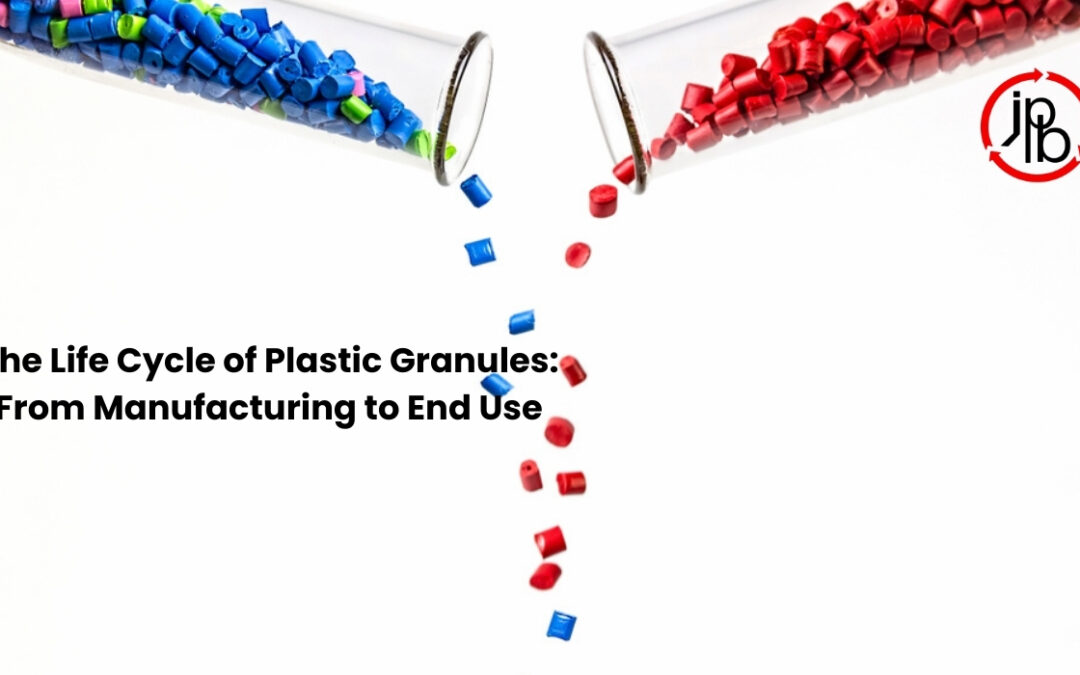
Plastic granules, sometimes called plastic resin pellets or plastic dana, are the small, uniformly shaped pellets that feed into plastic processing machines.
Think of these granules as the “flour” of the plastics world. Just like flour is the base for bread, cookies, and cakes, plastic granules form the base for things like bottles, bags, automotive parts, pipes, and countless consumer products.
These granules don’t just magically appear. They start from raw materials and go through precise manufacturing steps before they’re ready for processing. That’s where plastic raw material suppliers, plastic dana suppliers, and plastic granule suppliers come in.
- The Beginning: Raw Materials
At the earliest stage, plastic production starts with raw chemicals. These are basic materials like:
- Crude oil derivatives
- Natural gas derivatives
- Recycled polymers
Raw materials are processed through chemical reactions into long-chain polymers. These polymers are the building blocks for all types of plastics.
The Role of Plastic Raw Material Suppliers
Here’s where plastic raw material suppliers prove essential. They source, refine, and deliver the base chemicals that become plastic resins. It’s their job to ensure the base feedstock is:
- Consistent in quality
- Free from contamination
- Delivered on time
If a manufacturer gets inconsistent raw chemicals, the entire downstream process gets compromised. Poor raw material quality leads to uneven melting, weak polymer chains, and ultimately defective plastic products.
Top suppliers work closely with chemical manufacturers and logistics partners to guarantee reliability. They help plastic producers meet specifications for different products, from rigid plastics like polypropylene (PP) to flexible ones like polyethylene (PE).
- Polymerization: Turning Raw Materials into Resin
Once the raw materials arrive, the next step is polymerization a controlled chemical reaction that turns monomers into long polymer chains.
This is where the raw base evolves into resin the initial form of plastic that can be further processed into granules.
There are different polymerization processes depending on the type of plastic being made:
- Addition polymerization for plastics like polyethylene
- Condensation polymerization for nylons and polyesters
- Copolymerization for blends like ABS
The goal is consistent density, molecular weight, and thermal properties. That consistency directly impacts how well the plastic granules behave later during molding or extrusion.
- Pelletizing: Making Plastic Granules
Once the resin is ready, it’s time to turn it into the shape that processors want small, uniform granules.
How Pelletizing Works
The molten resin is forced through a die plate with tiny holes. These strands are cooled and chopped into pellets, often called plastic dana.
Here’s why this stage matters:
- Size consistency ensures steady feeding into machines
- Shape uniformity affects flow and melting behavior
- Surface quality influences how additives bond later
This is the core product that plastic granule suppliers provide to manufacturers. They buy resin from producers, pelletize it, and stock it in specific grades heat-stabilized, UV-resistant, flame-retardant, etc.
Difference Between Plastic Dana Suppliers and Plastic Granule Suppliers
You’ll sometimes hear both terms used almost interchangeably, but there’s a subtle difference:
- Plastic dana suppliers often refer to companies that provide standard pellet sizes in bulk.
- Plastic granule suppliers may offer a wider range of customized pellets, including color masterbatches, additives, and specialized formulations.
Both play a crucial role in getting the right form of plastic resin into production lines.
- Quality Control: Ensuring Performance
Before any pellets leave a supplier’s warehouse, they go through stringent quality checks.
Here’s what’s tested:
- Melt flow index (MFI): Measures how easily the plastic melts and flows critical for molding and extrusion.
- Moisture content: Water can cause defects like bubbles or cracking.
- Density and molecular weight: These properties define strength, flexibility, and processing behavior.
- Contaminant detection: Even small impurities can ruin a batch of final product.
Suppliers with strong quality control add real value. They document test results, trace batches, and often provide certificates of analysis. For manufacturers, that transparency saves headaches and rejects down the line.
- Storage and Handling
Granules might be delivered to a factory today, but get used next week or next month. Proper storage is more important than you might think.
Plastic granules are hygroscopic they absorb moisture from the air. If they sit in a damp environment:
- They can swell
- They can degrade
- They can cause processing defects
That’s why good plastic granule suppliers advise customers on storage conditions and often supply moisture-resistant packaging.
Some facilities have dry rooms or dehumidified bins to keep products stable before molding. Ignoring this step creates quality issues that are hard to fix once they’re in the machine.
- From Granules to Products: Processing Methods
Once the granules reach a factory, they’re ready for processing. There are three main ways processors use them:
Injection Molding
This is the most common method for producing:
- Containers
- Caps and closures
- Automotive parts
- Consumer goods
Granules are heated until molten, then injected under pressure into a mold. Consistency in granule quality means:
- Smooth filling
- Fewer voids or weak spots
- Higher dimensional accuracy
Extrusion
Used for long continuous products like:
- Pipes
- Sheets
- Films
- Profiles
For extrusion, uniform granule size and melting behavior are critical. Variations cause flow instability, thickness issues, and surface defects.
Blow Molding
Typically used for hollow items like:
- Bottles
- Drums
- Containers
Here, the melting and stretching behavior matters. Good pellet quality ensures proper wall thickness and mechanical strength.
In every case, the properties defined during manufacturing and provided by plastic raw material suppliers, plastic dana suppliers, and plastic granule suppliers determine how well the end product forms.
- Additives and Customization
Not all plastic products can use off-the-shelf granules. Sometimes you need:
- Color masterbatch
- UV stabilizers
- Flame retardants
- Reinforcements (like glass fiber)
Here’s what this means in practice:
- The base granules are mixed with additives to deliver performance benefits.
- Some plastic granule suppliers offer pre-blended compounds tailored for specific applications.
- Others provide base pellets and additive masterbatches separately and help customers blend them on site.
Customization adds complexity, but it’s crucial in industries like automotive, medical devices, and packaging.
- Logistics and Supply Chain
Plastics are globally traded commodities, so supply chain reliability matters. Delays or shortages anywhere from crude oil suppliers to resin producers can ripple through the system.
That’s why strong relationships with plastic raw material suppliers and plastic dana suppliers are strategic assets. When demand spikes, a supplier that can prioritize your orders, manage logistics, and communicate clearly is worth far more than the lowest-priced vendor.
Supply chain stability impacts:
- Inventory planning
- Production scheduling
- Pricing predictability
- Customer service levels
A reliable supplier network doesn’t just help you make products it helps you plan and grow.
- Environmental Considerations
This part can’t be ignored. Plastic waste is a global concern, and the life cycle of plastic granules has sustainability implications.
Here’s how the industry is shifting:
Recycled Resins
More manufacturers are blending recycled pellets into their materials. A good plastic granule supplier will:
- Track the source of recycled materials
- Certify recycled content
- Test for cleanliness and performance
Recycled granules let you maintain quality while reducing environmental impact.
Closed-Loop Systems
Some companies recover their post-industrial waste, reprocess it into granules, and reuse it in production. That’s not only sustainable it saves cost.
Regulatory Compliance
Suppliers help customers meet standards related to:
- Food contact safety
- RoHS or REACH chemicals
- Biodegradability claims
Environmental rules change quickly. A supplier that tracks regulations and adjusts product formulations helps manufacturers stay compliant.
- End Use and Performance
All of this leads to one thing: how well the final product works.
The performance of a plastic item depends on:
- Material selection
- Pellet quality
- Processing conditions
- Additive integration
When these align, the result is durable, consistent, and fit for purpose. When they don’t, you see weak products, rejects, and returns.
Here’s what good looks like:
- Bottles that don’t crack
- Automotive parts that resist heat
- Films that stretch without tearing
- Pipes that handle pressure
What this really means is that quality at the granule stage ripples through the whole life cycle.
- Choosing the Right Suppliers
Let’s break down what to look for when picking:
Plastic Raw Material Suppliers
They should offer:
- Transparent sourcing
- Consistent chemistry
- On-time delivery
- Technical support
Plastic Dana Suppliers
They need to:
- Provide uniform pellet size
- Support storage and handling guidance
- Maintain quality documentation
Plastic Granule Suppliers
Look for:
- Custom compound capabilities
- Additive expertise
- Recycling options
- Application support
In every case, your supplier should act as a partner, not just a vendor.
- Common Challenges and How to Solve Them
Every manufacturer runs into issues. Here are a few common ones and practical fixes:
Moisture in Granules
Moisture leads to bubbles in molded parts.
Fix: Use dry bins, desiccant dryers, and proper packaging immediately on receipt.
Inconsistent Melt Flow
This causes poor surface finish or uneven fill.
Fix: Check batch certificates and work with plastic granule suppliers who test MFI on every lot.
Supply Delays
Raw materials run short due to market fluctuations.
Fix: Maintain buffer stocks with trusted plastic raw material suppliers and diversify sourcing.
Quality Variation
Different batches behave differently.
Fix: Institute incoming inspection protocols and develop quality agreements with suppliers.
- The Future of Plastic Granules
Plastics aren’t going away. But the industry is evolving.
We’re seeing:
- More bio-based resins
- Greater use of recycled content
- Smarter tracking of material properties
- Digital traceability from raw feedstock to product
Suppliers are investing in analytics and quality automation. That means less guesswork and more predictable results.
- Final Thoughts
The life cycle of plastic granules isn’t a mystery. It’s a series of controlled steps each with its own challenges and value points. From the first feedstock delivered by plastic raw material suppliers, through the transformation into uniform pellets from plastic dana suppliers and plastic granule suppliers, to the final molded part, every stage demands attention.
If you care about product quality, operational reliability, and long-term growth, understanding this lifecycle is essential. And choosing partners who understand it too can make all the difference.